
Overgeared Hero: Merge RPG
5minlab Corp.Strategy
4.61.61K Reviews
- Version
- 1.43.1
- Installs
- 1.00M
- Age Rating
- Everyone
Screenshots
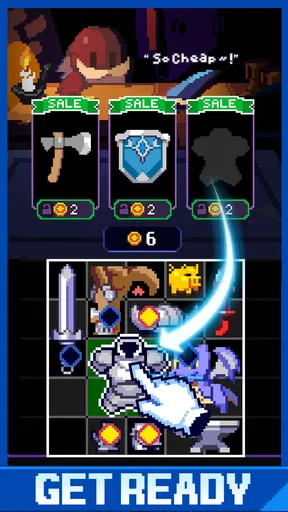
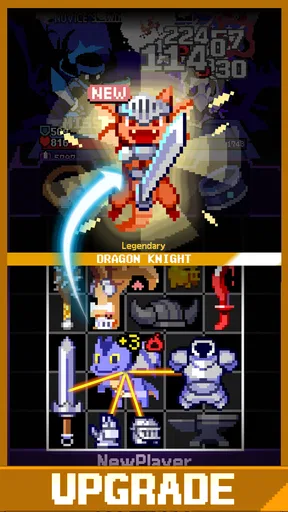
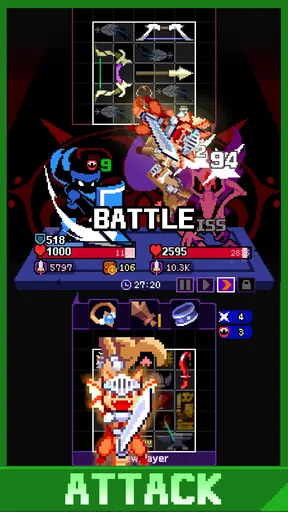
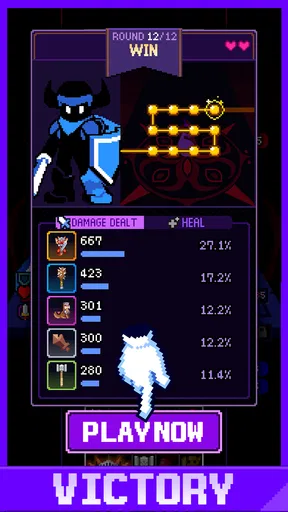
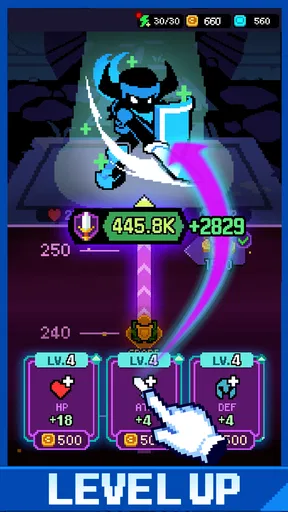
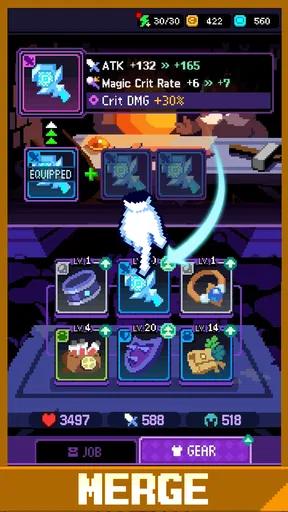
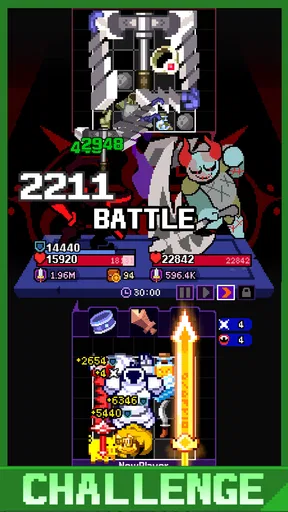
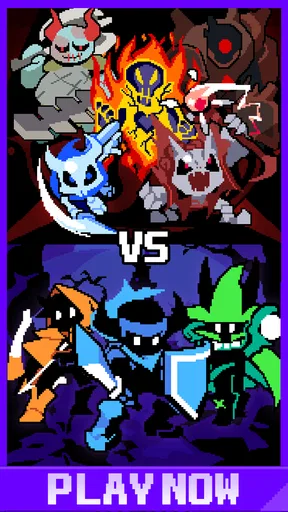
Our Review of Overgeared Hero: Merge RPG
 Analysis by Appyee
I went into Overgeared Hero: Merge RPG expecting a quick pixel-art strategy game, and that is exactly where its first-week appeal comes from. It gives me a compact loop: collect gear, combine pieces in the backpack, improve a hero, and let battles resolve without demanding constant tapping. The idea is easy to understand, but the interesting part is deciding what deserves space and what should be merged immediately.
That makes it a comfortable choice for short sessions. I can check my equipment, make a few upgrades, start another fight, and put the phone down without feeling that I have abandoned a complicated operation. At the same time, it is not simply a passive game. The automatic combat reduces the need for moment-to-moment control, so the strategic weight moves toward preparation. My decisions before a battle matter more than frantic reactions during it.
The game is a free strategy title from 5minlab Corp., aimed at Everyone. It has reached over a million installs and holds a 4.6 average from roughly sixty thousand ratings, which fits my impression that its basic format is immediately approachable. The current version is 1.37.2, and it runs on Android 7.0 or later. Those details make it easy to consider on an older compatible phone, although the experience still depends on how much repetition you personally tolerate.
Why the opening hours work so well
The backpack is the real center of the game. Instead of treating equipment as a simple reward screen, I have to think about how items fit into the build I am trying to create. Merging feels satisfying because it turns several small gains into one more meaningful piece of progress. That process also gives ordinary loot a purpose: even an unimpressive item can become useful when it contributes to a stronger combination.
I found the early decisions forgiving enough to experiment with. New players can learn by trying different arrangements rather than studying a long rulebook first. The pixel presentation helps here because the important information is visually direct. Gear, hero growth, and enemy encounters feel separated into understandable steps, so I rarely lose track of what I am meant to do next.
The automatic battles are especially useful when I am playing in the gaps of an ordinary day. A short break between errands, a quiet moment before bed, or a commute with limited attention all suit the format. I can prepare a loadout, watch the result, and decide whether the next upgrade is worth pursuing. It is much less demanding than a conventional action RPG, where missing a few seconds of input can ruin a run.
That convenience does come with a trade-off. If you want direct control over every attack, dodge, or ability, this will feel limited almost immediately. The pleasure is in building a capable hero rather than personally performing the battle. I would recommend it to someone who enjoys optimization and visible progression, not to someone looking for a deep real-time combat system.
The first useful habit I developed was resisting the urge to merge everything as soon as it appeared. Keeping a little flexibility in the backpack gives me more room to compare possibilities. A slightly weaker item may fit the developing build better than a stronger-looking piece, especially when the broader arrangement matters. That is a small but important distinction: the game rewards thinking about the whole backpack, not just chasing the largest individual number.
Another practical approach is to treat each session as a review of the hero’s current bottleneck. If battles are ending quickly but the hero is taking heavy damage, more offense may not solve the real problem. If survival is comfortable but progress feels slow, defensive improvements can become a poor use of limited space. I get more from the game when I ask what is actually stopping the next step instead of upgrading automatically.
What makes the loop more than simple merging
Merging is easy to understand, but it creates a quiet prioritization puzzle. Every item competes for attention, and the best choice is not always the most obvious one. I have to balance immediate improvement against future flexibility. That makes the backpack feel like a small planning board rather than a storage drawer.
The auto-battle structure strengthens that planning focus. Since I cannot rely on last-second intervention to fix a poor setup, preparation exposes weak decisions more clearly. When a fight goes badly, I usually learn more by reconsidering the equipment arrangement than by repeating the encounter unchanged. That feedback loop is one of the game’s strongest design choices.
It also makes the game suitable for players who like roguelike ideas but do not want a demanding action format. Runs can feel experimental, and the hero develops through choices made along the way, yet the controls remain light. Compared with a traditional turn-based strategy game, it asks for less attention during combat. Compared with a standard idle game, it gives me more to do with the rewards because the backpack decisions are not entirely automatic.
That middle position is valuable, but it also explains the game’s limits. Players who want a story-heavy role-playing adventure may find the experience too focused on systems. Players who prefer a pure idle game may find the inventory decisions more involved than they want. Its best audience is someone who wants a repeatable progression loop with a modest strategic layer, not a grand campaign or a mechanically intense battle system.
How I would use it during a normal week
My preferred routine is to play in two stages. I first make a quick pass through the backpack and remove obvious clutter through sensible combinations. Then I start a battle and return afterward for a more careful review. Separating those moments prevents me from making rushed decisions simply because I want to see the next fight begin.
This approach also helps with the game’s recurring rhythm. A session does not need to become a long commitment to feel worthwhile. I can make one meaningful adjustment and stop. That is important for a mobile game because a useful habit is easier to maintain when it does not require a large uninterrupted block of time.
For a friend deciding whether to install it, I would describe the first week as a test of patience with repetition. The novelty of merging gear and watching a stronger hero emerge is real. The more important question is whether the small decisions remain enjoyable after the first excitement fades. If you like checking a build, spotting inefficiencies, and gradually improving a setup, the answer may be yes.
Where the lasting value starts to weaken
After the opening period, the game’s value depends less on discovery and more on maintenance. The core loop remains pleasant when I approach it with a specific goal, such as improving a weak part of the build or testing whether a different gear arrangement performs better. It becomes less compelling when I open it without a plan and simply repeat the same actions.
That distinction matters because automatic combat can make progress feel smooth but also predictable. There is comfort in knowing that a short check-in will produce some forward movement. However, the same predictability can reduce the urge to return once I have understood the main pattern. The game needs my interest in refinement to keep its place on the home screen.
I think the strongest month-to-month use case is as a low-pressure side game. It works well beside more demanding games because it does not compete for all of my attention. I can play it when I want a small planning task rather than a dramatic event. It is less convincing as my only mobile game, especially if I need constant variety, a rich narrative, or a strong sense of personal control.
The free entry helps with that decision. I can try the complete basic loop without paying up front, while optional purchases range from $0.49 to $94.99 per item. I would approach those purchases carefully. A small optional expense may be reasonable if the game has become a regular habit, but the higher end makes it especially important to decide whether I am paying for lasting enjoyment or merely speeding through a repetitive stage.
My advice is to wait until the game has survived the novelty test before spending. If I still enjoy reviewing the backpack after several ordinary sessions, a purchase can be considered as a convenience rather than an attempt to manufacture interest. If the loop already feels routine, spending more is unlikely to fix the underlying problem.
The maintenance burden is light, but not invisible
The game asks for less active attention than most strategy RPGs, yet it still creates a small maintenance obligation. I need to keep the backpack organized, decide which items deserve merging, and check whether the hero’s current direction still makes sense. None of this is difficult, but it can become a chore if I let rewards accumulate without a clear sorting method.
I found it useful to avoid making every decision at the moment a reward appears. Immediate sorting can interrupt the satisfying flow of a session and encourage impulsive combinations. A better routine is to finish the current activity, then review the available gear with the hero’s next goal in mind. This turns inventory management into a deliberate checkpoint instead of a constant interruption.
Another maintenance issue is attention drift. Because battles resolve automatically, I can start a fight while distracted and later discover that I have repeated an ineffective setup. The game is forgiving enough for casual play, but it does not remove the need to notice patterns. A few seconds spent identifying why progress stalled is more useful than repeatedly pressing the next button.
That makes it a good fit for people who want low-input play but still enjoy small optimization tasks. It is a poor fit for anyone who wants a game that can be left entirely alone while still offering meaningful choices. The automatic parts save time, but they do not replace the player’s role in deciding how the hero should develop.
What can cause fatigue over time
The main source of fatigue is repetition without a fresh question to answer. Merging the next item is satisfying when I am curious about the result. It is less satisfying when it becomes a routine transaction. The game’s structure encourages frequent returns, but frequency alone does not guarantee that each return will feel worthwhile.
Backpack decisions can also become mentally tiring when the screen fills with choices that differ only slightly in practical value. Early on, that comparison feels strategic. Later, it can feel like housekeeping. The solution is not to overanalyze every item. I get better results by choosing a simple build direction, keeping only gear that supports it, and accepting that not every decision needs to be perfect.
There is also a fatigue risk for players who expect a strong sense of mastery from combat itself. Since the battles are automatic, improvement is expressed through preparation rather than execution. If you measure satisfaction by landing difficult attacks or reacting to enemy behavior, the game may feel passive. A conventional action RPG will be a better choice in that situation.
On the other hand, players who dislike punishing failure may appreciate the calmer structure. The game lets me focus on adjusting a build instead of blaming a missed input. That makes it a sensible option for relaxed evening play, particularly when I want a strategy game that does not demand complete concentration.
Who should install it, and who should skip it
I would recommend it to mobile players who enjoy pixel-art RPG presentation, incremental hero growth, and inventory puzzles that can be solved in short sessions. It is especially suitable for someone who likes the idea of a roguelike run but prefers automatic battles. The low entry barrier also makes it easy to sample before deciding whether its recurring loop fits your habits.
I would skip it if your priority is a substantial storyline, detailed character interaction, competitive multiplayer, or hands-on combat. Those expectations point toward other strategy or role-playing alternatives. I would also be cautious if you tend to feel pressured by upgrade systems and optional purchases. A free game with item purchases can remain enjoyable without spending, but you should be comfortable setting your own limit before beginning.
The Everyone age rating makes the game broadly accessible, though accessibility in practice also depends on whether its repeated upgrade cycle matches the player’s attention span. A younger or casual player may enjoy the clear merge concept, while an experienced strategist may want more layers than the compact format provides. Neither reaction is surprising; the game is designed around convenience and gradual improvement rather than complexity for its own sake.
My long-term verdict
Overgeared Hero: Merge RPG earns a place as a dependable side game, not necessarily as the one title I would build my entire mobile routine around. Its strongest qualities are clear: the backpack creates real decisions, automatic combat makes sessions easy to fit into daily life, and the pixel roguelike style gives ordinary upgrades a sense of progression. The loop is more thoughtful than a completely passive idle game and less demanding than a conventional action RPG.
Its weakness is the same structure that makes it convenient. Once I understand the rhythm, the game can begin to feel like maintenance unless I actively set myself a goal. The long-term question is therefore personal: do you enjoy repeatedly tuning a hero, or do you need new mechanics and more direct control to stay interested?
I would install it for a relaxed trial and spend the first sessions learning how the backpack changes the outcome of battles. I would keep my equipment choices flexible at the beginning, avoid rushing into purchases, and judge the game by whether I still look forward to the next build adjustment after the opening novelty has passed. That is a fair test because the game’s lasting value comes from the decisions between battles, not from its initial promise alone.
For me, it succeeds as a compact strategy RPG with a practical everyday rhythm. It is easy to recommend to a friend who wants something approachable, free to start, and comfortable to play in short bursts. I would not recommend it as a replacement for a story-driven RPG or a skill-focused combat game. Its lasting strength is the small satisfaction of making a better hero from limited space; if that kind of quiet optimization sounds enjoyable, this is a worthwhile addition to your Android game library.
Privacy and Permissions
See what permissions an app requests and how it handles your data.
- Wi-Fi connection information
- view Wi-Fi connections
- Other
- view network connections, full network access, control vibration, prevent device from sleeping, Google Play license check, read Google service configuration
Verdict
Strengths of Overgeared Hero: Merge RPG
- Simple merge mechanics make progression easy to understand.
- Short sessions work well for casual mobile play.
- Hero upgrades provide a satisfying sense of steady progress.
- Idle rewards help advance your team while you are offline.
- Bright character designs give the game a friendly visual style.
Limitations of Overgeared Hero: Merge RPG
- Progress can become repetitive after the initial stages.
- Higher upgrades may require considerable grinding or patience.
- Random rewards can make specific hero progression unpredictable.
- Frequent battles may feel too hands-off for active RPG fans.
- Limited device storage may be affected by updates and downloaded assets.
Similar Picks in This Category
View All
Clash of Clans
Supercell4.5

Plants vs. Zombies™
ELECTRONIC ARTS3.7

Lords Mobile: Kingdom Wars
IGG.COM4.5

Clash Royale
Supercell4.4

State.io — Conquer the World
CASUAL AZUR GAMES4.1

Car Driving School : Car Games
Spark Game Studios3.9
Frequently Asked Questions
What is Overgeared Hero: Merge RPG about?
Overgeared Hero: Merge RPG is a casual role-playing game built around merging equipment and strengthening a hero. You combine matching items to create better gear, then use your upgraded character to progress through battles and increasingly difficult stages. The gameplay is designed for short sessions, making it suitable for players who enjoy simple progression, collection systems, and RPG upgrades without complicated controls.
How does the merge and equipment system work?
The main progression mechanic involves combining similar equipment or game items to produce a stronger version. As your inventory improves, you can equip more powerful gear and increase the hero’s combat performance. Managing limited space and deciding which items to merge can become important, especially when several upgrade options are available. The system is easy to understand, but later progress may require more careful resource planning.
Can Overgeared Hero: Merge RPG be played offline?
Some parts of Overgeared Hero: Merge RPG may be accessible without a constant internet connection, particularly basic progression or previously loaded gameplay. However, online access can still be required for advertisements, rewards, account-related features, updates, events, and purchases. Availability may also differ between Android and iOS versions. It is best to check the connection requirements on the relevant app-store listing before downloading.
Is Overgeared Hero: Merge RPG free to download and play?
The game can generally be downloaded without an upfront purchase, but free access may include advertising and optional in-app purchases. These purchases can provide resources, convenience, or faster progression, while patient players may still advance by completing available activities and collecting rewards. Before spending money, review the item descriptions and purchase settings, particularly if the game will be used by children.
Is Overgeared Hero: Merge RPG suitable for all players?
Overgeared Hero: Merge RPG is most suitable for players who enjoy casual RPGs, equipment upgrades, merging mechanics, and gradual character development. Its controls are relatively approachable, so it does not require advanced gaming skills. Nevertheless, the game may feel repetitive to users who prefer story-heavy adventures or fast, action-focused combat. Check the age rating, device compatibility, storage needs, and privacy information before installation.
Play our best games!


